Blog
Why Does Weed Make You Hungry? THC and CB1 Explained
In this article
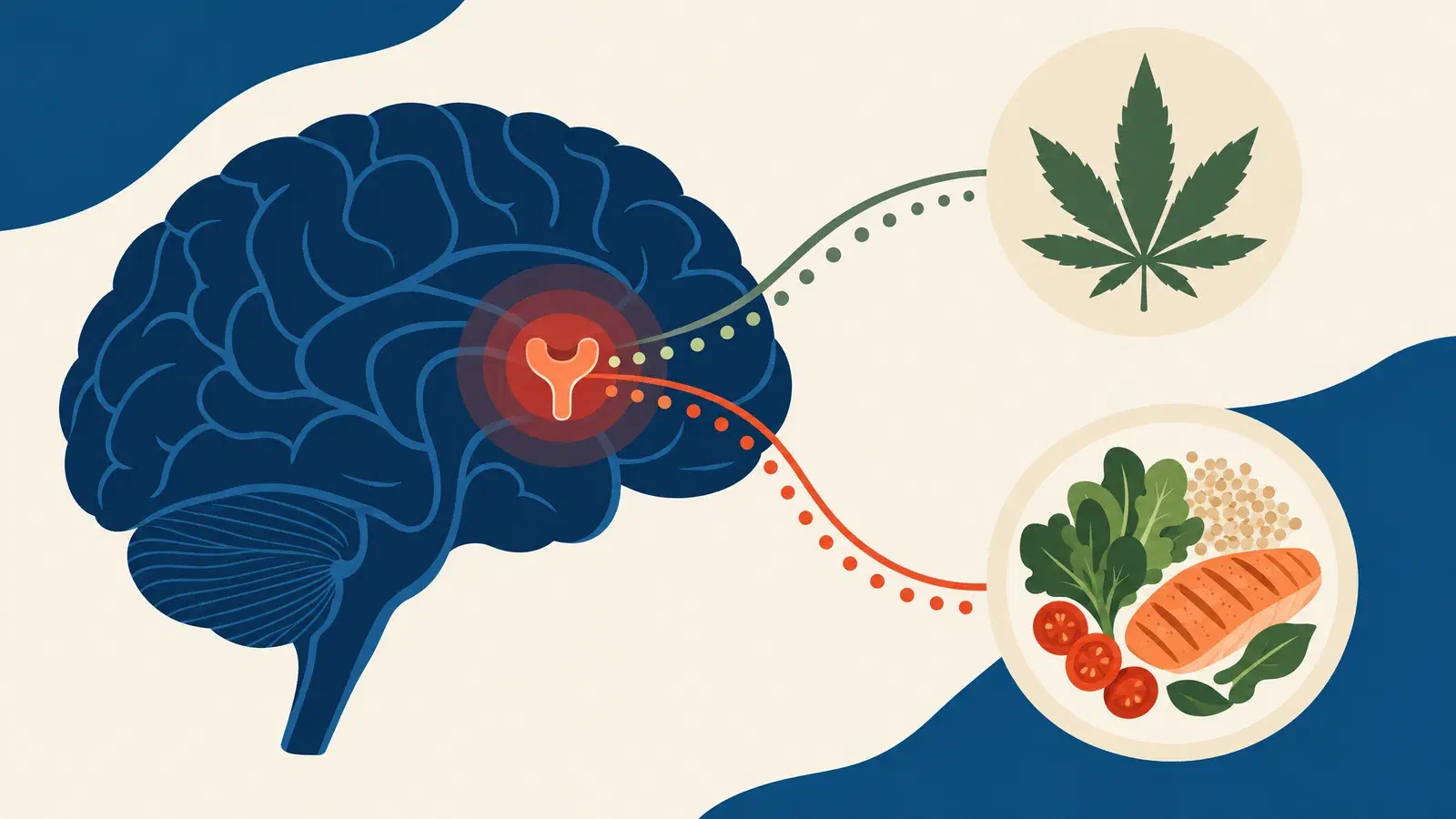
Say you've finished dinner, yet the leftover garlic bread suddenly seems worth another visit to the kitchen. Why does weed make you hungry when you've already eaten? THC, cannabis's main intoxicating ingredient, activates cannabinoid type 1 receptors, usually called CB1. Those receptors help regulate appetite and the brain's response to food. THC can therefore encourage eating beyond the hunger you'd expect from an empty stomach. The smell and “fullness neuron” explanations are more specific: they come from experiments in mice, not proof that every human craving follows the same route.1 2 3
The Acomplia Report's early coverage of the marijuana munchies and rimonabant connects this question to an attempted obesity treatment. We're an independent news archive that tracked rimonabant from its trials to its 2008 withdrawal. The drug was intended to push CB1 signaling in the opposite direction: suppress appetite by blocking the receptor THC activates.
Why does weed make you hungry after you've eaten?
A second helping can feel puzzling when your stomach already feels full. Say you aren't interested in another bowl of soup but can't stop thinking about the biscuit tin. Appetite includes your desire to eat, which doesn't always match your body's immediate energy needs.
Your body makes its own cannabinoid signals. These include anandamide, also called AEA, and 2-arachidonoylglycerol, or 2-AG. They're endocannabinoids: “endo” means they originate inside the body. Along with their receptors and the enzymes that make and break them down, they form the endocannabinoid system. You don't need cannabis to have this signaling system.1
Zou and Kumar's 2018 review in the International Journal of Molecular Sciences describes how endocannabinoids regulate communication between nerve cells. CB1 receptors often sit on the sending end of a connection, where activation reduces neurotransmitter release. Because that release can normally excite or inhibit the next cell, reducing it doesn't have one identical effect throughout the brain.1
THC acts on this existing machinery. It isn't anandamide, and consuming THC isn't the same as generating a brief, local endocannabinoid signal. But both can activate CB1-dependent pathways involved in feeding. The archive's explanation of the endocannabinoid system gives the background to the receptor target.
For you, the useful distinction is between feeling hungry and needing more food. If appetite changes during medical cannabis use, a note about hunger before use and what you actually eat afterward gives a clinician more information than “I get the munchies.” It separates the sensation from its nutritional consequences.
Does THC make food smell more tempting?
An appealing smell can interrupt a plan to leave the kitchen. Say warm toast seems unusually hard to ignore. That experience fits a proposed mechanism, but a toast craving doesn't prove that THC has sharpened your human sense of smell.
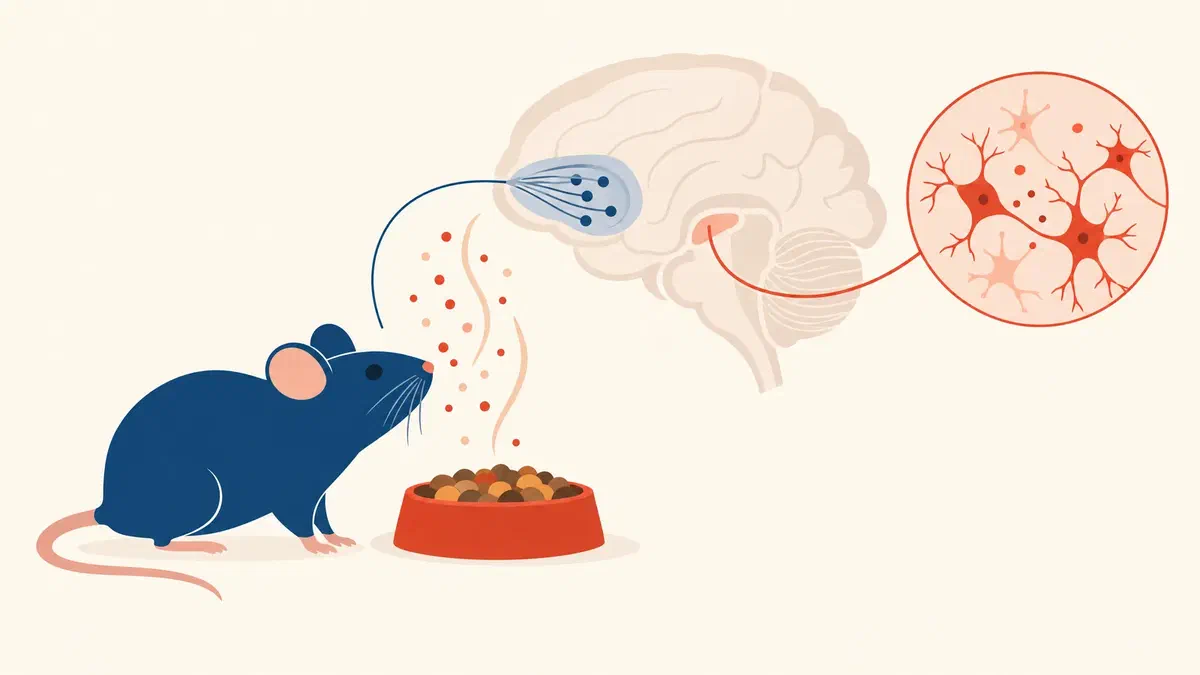
Soria-Gómez et al. (2014), in Nature Neuroscience, found that CB1 signaling increased odor detection and food intake in fasted mice. The researchers identified CB1 receptors on nerve endings carrying feedback from the olfactory cortex to the main olfactory bulb, a brain structure involved in processing smells.2
They manipulated the receptors locally using pharmacological and genetic methods. Endocannabinoids and externally administered cannabinoids reduced excitatory input along this feedback route. In the studied circuit, that change supported stronger odor detection and more eating. THC was part of the experimental evidence, rather than merely a comparison made afterward.2
The result is a causal explanation in mice under specific conditions. It doesn't establish how much a person's smell sensitivity changes after cannabis, or that smell explains every episode of increased appetite.
When you read a claim that cannabis “makes food taste better,” the helpful question is what researchers measured. Odor detection, reported pleasure and calories consumed aren't interchangeable outcomes. The mouse study measured a sensory pathway linked to feeding; it wasn't a human taste test.
How can “fullness neurons” promote eating?
Feeling full doesn't always end the desire to eat. Say you've put down your fork, then find yourself considering dessert. A headline about cannabis “switching off fullness” sounds plausible, but it misses the surprise in the POMC experiment.
POMC neurons are cells in the hypothalamus, a brain region that helps regulate feeding. POMC stands for pro-opiomelanocortin. These neurons usually promote satiety, the feeling that you've had enough food. Koch et al. (2015), in Nature, expected cannabinoid-driven eating might involve reduced activity in those cells.3
They found the reverse. At feeding-stimulating levels in fed mice, CB1 activation increased POMC neuron activity. Inhibiting these neurons reduced cannabinoid-induced feeding, while activating them increased it. So their activity helped drive eating in that experimental setting.3
The explanation involved what the cells released. The POMC precursor can produce alpha-melanocyte-stimulating hormone, or alpha-MSH, which suppresses appetite, as well as beta-endorphin. CB1 activation selectively increased beta-endorphin release without increasing alpha-MSH release. Blocking opioid receptors with naloxone blocked the acute feeding response.3
That doesn't make naloxone a suggested remedy for the munchies. It was an experimental tool used to test a mechanism, not a clinical trial of appetite management in cannabis users.
The practical reading rule is to distinguish cell activity from cell output. A neuron can become more active while its effect on eating changes. “Cannabis shuts down fullness neurons” is a poor account of this study because the researchers observed increased activity, with a different pattern of peptide release.
An appetite surge doesn't predict your weight trend
Extra snacking can be unwelcome if you're trying to keep weight stable. Say you use medical cannabis for another symptom and repeatedly finish a packet of crackers afterward. That pattern deserves attention, but it doesn't tell you what your weight will do over the following months.
Short-term hunger, food intake and longer-term weight are different outcomes. The mouse experiments explain possible feeding mechanisms; they can't calculate your calorie surplus. Nor can they establish a weight-management benefit or harm for a particular cannabis product. Those questions need evidence in people and a clearly defined product.2 3
A food-and-symptom record can make the discussion more concrete. You could record the product's stated THC and CBD content, the time you used it, your appetite beforehand and what you ate afterward. Including the symptom you were treating matters: a clinician needs to judge the intended benefit alongside the unwanted eating.
The reason this helps is that “cannabis” doesn't name one standardized exposure. NCCIH's 2019 fact sheet notes that some products contain cannabinoid amounts that differ substantially from their labels. A strain name alone isn't a reliable description of the dose or composition.6
If unwanted eating is recurring, you could ask whether the formulation or overall treatment plan deserves review. It's safer than assuming that more THC, a different strain name or a supplement will solve the problem. These mechanistic studies don't establish any of those approaches.
And ongoing unintentional weight loss needs assessment even if THC makes food more appealing. An appetite response doesn't explain why you're losing weight.
Rimonabant tested the reverse of the munchies
A receptor that encourages eating seems an obvious target for an appetite suppressant. Say a drug advertisement promises to “turn hunger off.” The rimonabant story shows why the next question should concern clinical benefit and adverse effects, rather than the neatness of the mechanism.
Rimonabant, marketed in Europe as Acomplia, blocked CB1 signaling. The aim was to reduce feeding and improve weight-related metabolic outcomes. It wasn't a treatment for cannabis-related overeating. EMA records show that Acomplia was authorized in the European Union in June 2006 as an addition to diet and exercise.5
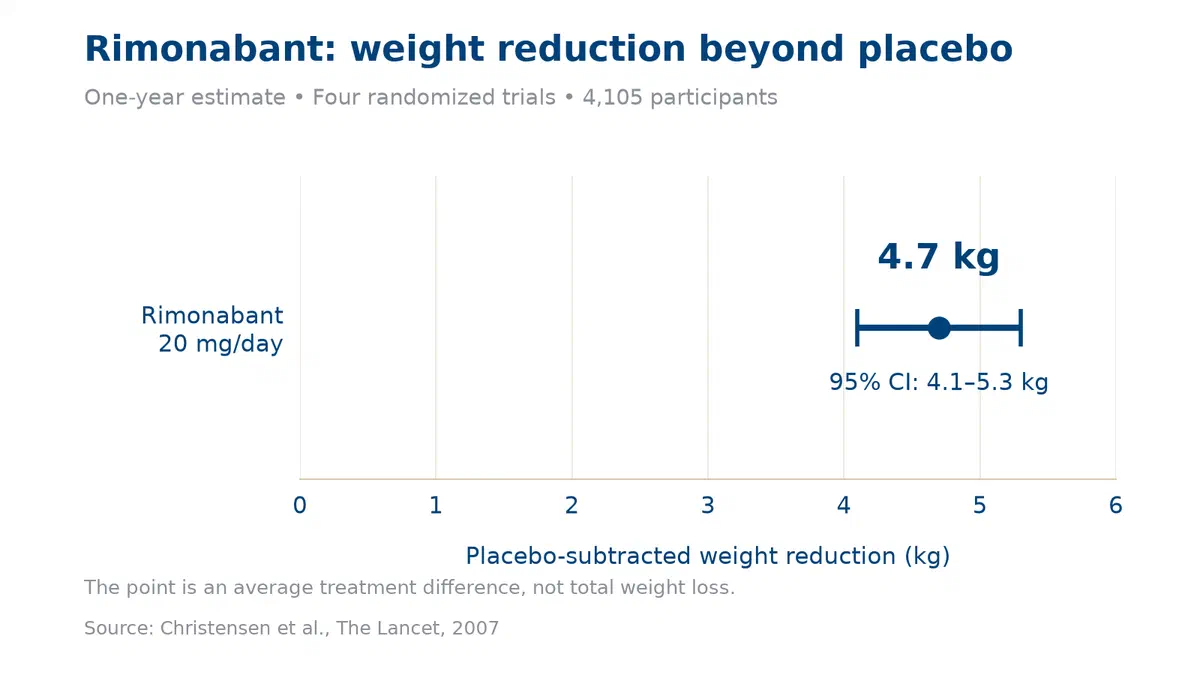
There was measurable weight loss. Christensen et al. (2007), in The Lancet, pooled four randomized trials with 4,105 participants comparing rimonabant 20 mg daily with placebo. After one year, rimonabant produced 4.7 kg more weight reduction than placebo, with a 95% confidence interval of 4.1–5.3 kg.4
That's placebo-subtracted weight loss: the treatment group's reduction minus the placebo group's reduction. It isn't total weight loss, and it isn't a result every participant achieved. The trial dose describes the historical evidence, not a treatment recommendation. The rimonabant trial archive provides context for the original development program.
But success at reducing weight didn't establish an acceptable safety profile. The same receptor target raised a separate problem.
Why CB1 blockade affected mood as well as appetite
An appetite drug can cause harm outside the systems a patient wants to change. Say someone's weight falls, but anxiety makes continuing treatment intolerable. That isn't a minor inconvenience to subtract from the kilograms lost.
CB1 receptors participate in brain functions beyond feeding, including processes associated with anxiety and depression. Broadly blocking CB1 can therefore interfere with signaling outside appetite circuits. That's a biologically plausible explanation for rimonabant's psychiatric effects, though it doesn't identify one proven cellular cause for every affected patient.1
The clinical signal was clear. Christensen et al. reported an odds ratio of 2.5 for stopping treatment because of depressive mood disorders, and 3.0 for stopping because of anxiety, compared with placebo. The trials had excluded people with depressed mood.4
An odds ratio compares the odds of an outcome between groups. Here, the outcome was treatment discontinuation for a particular psychiatric reason. These figures don't mean that 2.5 or 3.0 out of every patient group developed symptoms, and they aren't absolute percentages. They also don't describe the incidence of every mood-related adverse event.
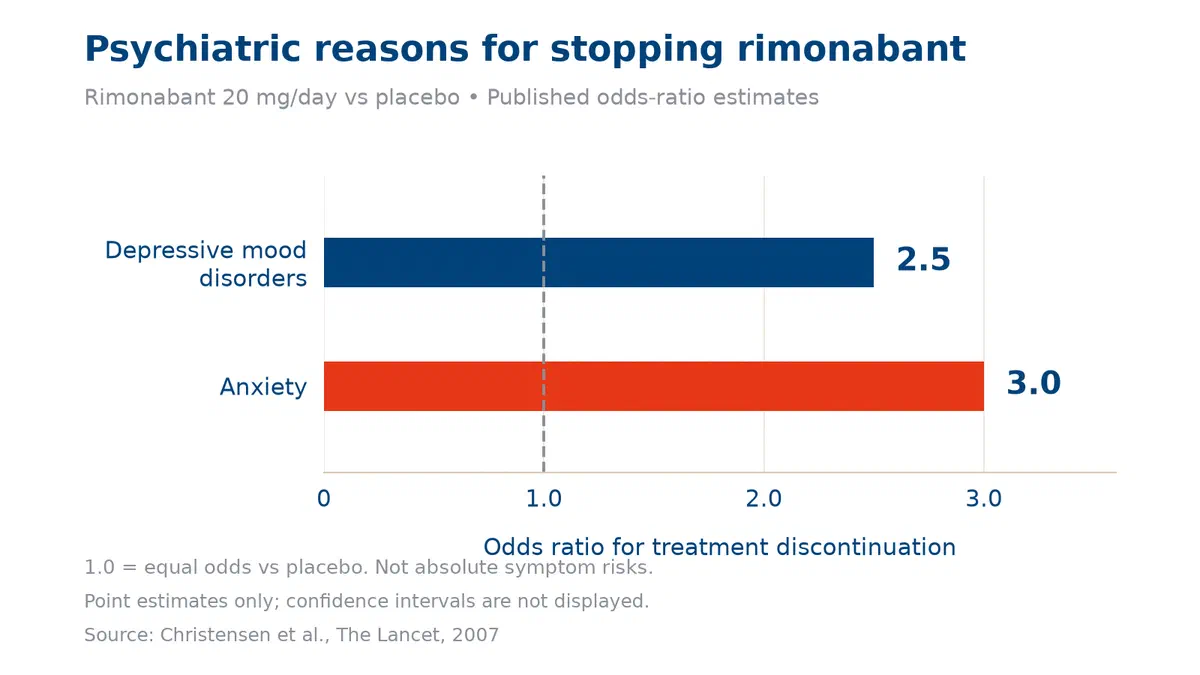
On 23 October 2008, EMA recommended suspending Acomplia's marketing authorization. Its assessment found an approximate doubling of psychiatric-disorder risk versus placebo and concluded that further risk-reduction measures couldn't adequately address the problem.5 That broader assessment isn't the same endpoint as the discontinuation odds in the chart.
Our historical side-effect coverage and report on the European market withdrawal document how the concerns developed. The lesson for any new appetite drug is specific: mood-related exclusions, withdrawals and adverse events belong beside the weight-loss result, not in an afterthought.
Questions people ask about cannabis and hunger
The receptor explanation can leave everyday questions unanswered. Say you're comparing a THC-containing product with CBD and wondering whether both will affect dinner. These distinctions matter more than treating all cannabinoids as equivalent.
Does CBD give you the munchies?
CBD isn't THC, so you shouldn't assume the same appetite effect. NCCIH lists decreased appetite among possible CBD adverse effects. CBD products can also contain unexpected THC or interact with medicines.6 If appetite changes, the product's actual composition and your medication list are useful subjects for a clinician or pharmacist.
Can you get the munchies even when you're full?
Yes, increased appetite can occur without an empty stomach. The Koch study provides one mechanism for cannabinoid-driven feeding in already-fed mice.3 It doesn't prove that this exact circuit causes your experience. Recording whether you felt full before the craving helps distinguish extra desire to eat from hunger after a missed meal.
Can you use rimonabant to stop the munchies?
Rimonabant isn't an appropriate self-treatment for cannabis-related appetite. It was an obesity drug whose psychiatric risks led EMA to recommend suspension.5 If THC-related eating is a problem during medical use, the useful conversation concerns the cannabis treatment and nutrition plan—not finding withdrawn Acomplia online.
For medical cannabis, the goal is useful eating without unacceptable harm
An appetite increase may be welcome when eating has become difficult. Say a person with HIV-associated weight loss feels more interested in lunch after a prescribed cannabinoid. The important question is whether that interest translates into adequate nutrition without adverse effects that outweigh the benefit.
NCCIH records that the FDA approved dronabinol, a synthetic form of THC, in 1992 for loss of appetite associated with weight loss in people with HIV/AIDS. It also distinguishes approved cannabinoid medicines from plant cannabis, which the FDA hasn't approved for medical use. Overall evidence for cannabis or cannabinoids in HIV/AIDS remains limited.6
An approved indication isn't evidence that any cannabis product treats every cause of low appetite. If you're using medical cannabis, you could ask your clinician what outcome would count as success: finishing meals, stabilizing weight or another goal appropriate to the illness. That question turns a vague benefit into something you can assess together.
A second question concerns harm. NCCIH describes risks including dizziness, impaired alertness, cannabis use disorder and recurrent severe vomiting in some long-term, high-dose users.6 More enthusiasm for food doesn't cancel those concerns. Persistent vomiting or continued weight loss deserves medical assessment rather than being accepted as part of treatment.
The useful endpoint is an agreed eating and nutrition goal, reviewed alongside symptoms and adverse effects. “I feel hungrier” may start that conversation. It shouldn't be where the assessment stops.
References